






If you’re visiting NYC for the first time, you don’t need to learn the entire subway system.
Most tourists can get almost everywhere using just a few lines: A/C/E, 1/2/3, N/Q/R/W, and the 7 train.
These lines cover Midtown, Times Square, Central Park, Lower Manhattan, and easy routes to Brooklyn.
If New York City’s subway map feels overwhelming at first, that’s completely normal.
We’ve picked out the simplest routes that hit the main sights — no complicated transfers, no overthinking.
Just the lines tourists actually use to get around and start exploring right away.
 NYC Subway Basics (2 Things Tourists Mess Up Most)
Before you pick a line, remember two quick basics: uptown vs. downtown (direction matters more than the line) and local vs. express (the same letter/number can skip stops). NYC trains run 24/7, but late nights can mean longer waits and surprise reroutes — so it’s normal to double-check before you swipe/tap.
Two rules we use every time:
(1) Direction first. Don’t pick a line — pick Uptown or Downtown.
(2) Stop list second. Check the next few stops (or the station screen). If they match your plan, you’re on the right train.
 How to Pay (OMNY in 10 Seconds)
The easiest way for most visitors is OMNY: just tap a contactless card/phone at the turnstile. The best part is the weekly fare cap — once your taps hit $35 within 7 days, the rest of your subway + local bus rides are free for that same 7-day window (using the same card/device).
Make sure you keep tapping with the same card or the same phone — mixing cards can break the cap. If your tap fails, step aside and try again with a physical card (it’s usually faster than troubleshooting your wallet app).
 Best NYC Subway Lines for Tourists
If you only remember one thing: A/C/E + 1/2/3 + N/Q/R/W + 7 will cover most of what tourists do.
CHEAT SHEET:
| Subway Line | Main Areas | Best For Tourists |
|---|---|---|
| 7 | Midtown, Grand Central Terminal, Hudson Yards | Skyline views, fast sightseeing, easy food detours |
| A / C / E | Times Square, Penn Station, World Trade Center | Fast travel, Downtown sights, Brooklyn trips |
| 1 / 2 / 3 | Upper West Side, Midtown, Downtown | Straight Manhattan route, very easy navigation |
| N / Q / R / W | Midtown, Union Square, Canal Street | Shopping days, fast north–south movement |
| B / D / F / M | Bryant Park, Broadway area | Theater district, Midtown landmarks |
| 4 / 5 / 6 | Grand Central, museum area, Brooklyn Bridge / City Hall | Museums, quick Downtown access |
Use the table like a shortcut: pick the line that matches your day (Midtown / Downtown / museums / Brooklyn), then scroll to that line for the best stops and transfers.
1. The 7 (Purple Line)
- Key Stops: Hudson Yards (34th St.), Times Square (42nd St.), Grand Central (42nd St.), and Citi Field (Flushing–Main St.)
- Why It’s Great:
- Hudson Yards (Edge observation deck, High Line)
- Times Square
- Grand Central (iconic terminal)
- Quick ride to Mets games at Citi Field
Perfect for: Edge + High Line days, quick Midtown hopping, Grand Central photos
Avoid if: weekday rush hour (it gets packed fast)
Easy transfer: Grand Central → switch to 4/5/6 for Upper East Side museums
If we only have half a day, this is the easiest way to stack Midtown highlights without wasting time.
Tip: During weekday rush hours, the 7 train can be extremely crowded — mid-day and evenings are much more comfortable.
2. The A/C/E (Blue Lines)
- Key Stops: Columbus Circle (59th St.), Times Square (42nd St.), Penn Station (34th St.), World Trade Center (E)
- Why It’s Great:
- Direct to Times Square and Penn Station (Amtrak hub)
- Easy access to 9/11 Memorial and One World Observatory (E line)
- The A train goes to Brooklyn (DUMBO, great skyline views) and even Rockaway Beach
Perfect for: fast Midtown access, Downtown sightseeing near World Trade Center, easy Brooklyn day trips
Avoid if: late nights on local C trains (longer waits)
Easy transfer: Times Square → switch to N/Q/R/W for quick city crossing
This is our “fast lane” when friends want Times Square + Downtown in the same day without complicated transfers.
Tip: The A train is fast, but always check if it’s running express — especially late at night or on weekends.
3. The 1/2/3 (Red Lines)
- Key Stops: Upper West Side (72nd St.), Times Square (42nd St.), Penn Station (34th St.), Wall Street area (2/3)
- Why It’s Great:
- Fast travel between Midtown and Lower Manhattan
- Near Lincoln Center, American Museum of Natural History, Central Park
- 2/3 lines are express for quicker trips
Perfect for: straight north-south Manhattan travel, Central Park stops, Downtown history walks
Avoid if: you accidentally take express 2/3 when you need local stops
Easy transfer: Times Square → switch to A/C/E or N/Q/R/W
When someone says “I’m nervous about the subway,” we put them on these lines first — it’s basically a straight shot.
4. The N/Q/R/W (Yellow Lines)
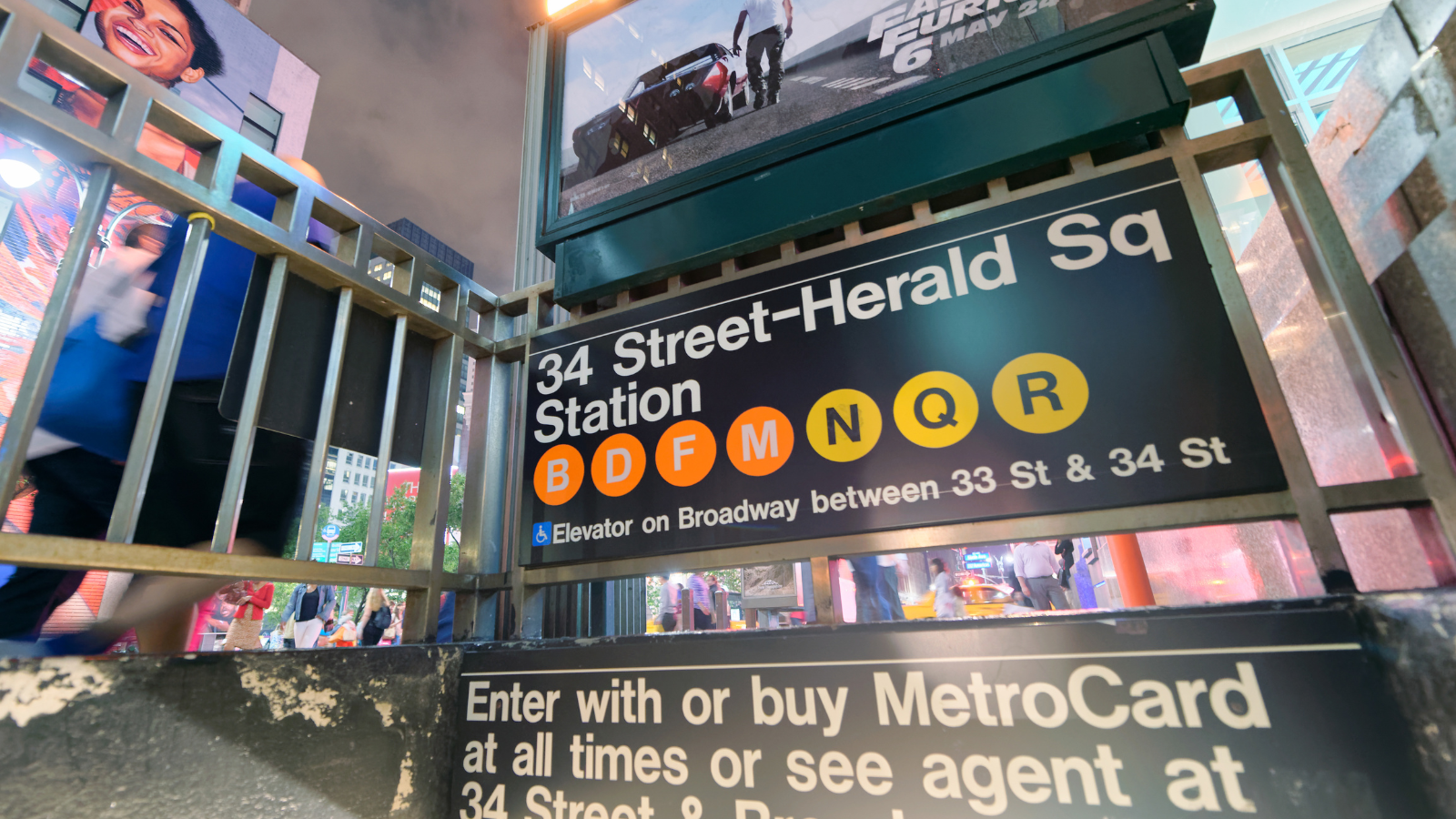
- Key Stops: Times Square (42nd St.), Herald Square (34th St.), Union Square (14th St.), Canal Street
- Why It’s Great:
- Union Square (busy market, local shops)
- Herald Square (Macy’s, shopping)
- Chinatown (Canal St.)
- Astoria (N/W) for fantastic Greek food and nightlife
Perfect for: shopping days, Midtown to Downtown flow, quick access to Union Square
Avoid if: service changes on weekends (check before entering)
Easy transfer: Union Square → switch to 4/5/6 or L
This is the line group we use when the plan is shopping + quick moves between Midtown and Union Square.
Tip: These lines are great for Midtown and Downtown, but weekend service changes are common — check directions before entering the station.
5. The B/D/F/M (Orange Lines)
- Key Stops: Rockefeller Center (47–50th St.), Herald Square (34th St.), Bryant Park (42nd St.)
- Why It’s Great:
- Perfect for midtown landmarks like Radio City Music Hall, Top of the Rock
- F train heads straight to Coney Island (boardwalk, rides, Nathan’s hot dogs)
Perfect for: Bryant Park area near Bryant Park, theater district access, fast Midtown routes
Avoid if: late-night B train (weekday only)
Easy transfer: Rockefeller Center area → switch to 1/2/3
If you’re doing Bryant Park + Rockefeller + Herald Square, these trains save a ton of walking.
6. The 4/5/6 (Green Lines)
- Key Stops: Grand Central (42nd St.), Union Square (14th St.), Brooklyn Bridge–City Hall, Upper East Side (86th St.)
- Why It’s Great:
- Serves the East Side, including the Met (a short walk from 86th St.)
- Express trains (4,5) can speed up your trip
- Grand Central is a classic NYC must-see
Perfect for: Grand Central access, museum hopping near The Metropolitan Museum of Art, quick Downtown connections
Avoid if: rush hour express 4/5 when you need local stops
Easy transfer: Grand Central → switch to 7 or S shuttle
For museum days, this is the simplest way to bounce between Grand Central and the Upper East Side.
 Best subway lines by travel style
Best subway line if you hate transfers:
A / C / E
Best line if you’re staying near Times Square:
1 / 2 / 3 or N / Q / R / W
Best line for first-time visitors:
A / C / E
Best line for museums and Central Park:
1 / 2 / 3 and 4 / 5 / 6
Best line for Brooklyn day trips:
A or F
Best line for skyline moments:
→ A train toward Brooklyn for bridge + waterfront views
→ 7 train to Hudson Yards for modern skyline photos
Best line for food detours:
→ 7 train into Queens for international eats
→ N/W trains to Astoria for Greek food, cafés, and bakeries
Best line when you’re tired of walking:
→ N/Q/R/W trains for fast, easy hops between Midtown and Downtown sights
If you prefer simple ready-made routes, here are three easy ones most visitors use:
Midtown in one afternoon:
Times Square → Grand Central → Bryant Park → Rockefeller Center
Downtown + skyline day:
WTC / 9-11 area → Brooklyn Bridge walk → DUMBO waterfront → return to Manhattan at sunset
Museum + Central Park day:
Upper West Side museum stop → Central Park walk → Upper East Side museums → Grand Central
 Helpful Subway Tips for Tourists
- Know Uptown vs. Downtown: Always check signs for the direction you need.
- Have Your Fare Ready: Whether using a MetroCard or tapping with OMNY, be prepared so you don’t slow down at the turnstile.
- Avoid Rush Hour: If possible, dodge the crowd on weekdays around 7–9 AM and 4–7 PM.
- Use a Map or App: Grab a free paper map or try apps like Google Maps or Citymapper for real-time info.
- Stand Aside: Let people exit the train before you step on, and keep clear of the doors once inside.
- Check service changes before you enter the station
Weekend reroutes and late-night delays are common — a quick look at alerts from Metropolitan Transportation Authority or your navigation app can save you a lot of time. - Use the correct station exit
Big stations have multiple exits. Follow the street signs inside the station so you come out on the right corner instead of walking extra blocks. - Stand clear of closing doors
Trying to hold subway doors slows the train and annoys locals — wait for the next one (another usually arrives in minutes). - Never chase a completely empty car. If one car is empty while the rest are normal, there’s usually a reason.
- Rush hour is the real “hard mode.” If you can, avoid 8–10 AM and 4–6 PM on weekdays.
- Stand near the exit you need. Big stations have multiple exits — follow the signs for the exact street corner.
- Express mistake fix: If you missed your stop, don’t panic — get off at the next stop and take a train back one stop.
- If you’re unsure, follow the crowd at big hubs. Times Square, Grand Central, Herald Square usually make transfers straightforward.
- Use station screens — not just the map.
Platform screens show the next trains, directions, and delays in real time. If something looks off (long wait, reroute), switch platforms or adjust before you even board. - Use navigation apps — they make the subway effortless.
Most visitors rely on Google Maps for simple directions and Citymapper for real-time delays, reroutes, and the fastest subway options — especially on weekends.
If you’re using the subway efficiently, you’ll probably hit multiple paid attractions in one day. That’s where an attraction pass can make planning simpler (and cheaper) — especially for first-timers.
 The Easiest Way to Save on NYC’s Must-See Attractions
If you’re planning to visit more than two major attractions, CityPASS is usually the simplest way to save money without locking yourself into a strict schedule.
You can choose attractions as you go, skip some ticket lines, and avoid paying full price at each entrance.
👉 Check current CityPASS options for NYC
Walking Tours: The Best Way to Explore After the Subway
Once you step off the train, most of New York’s best spots are meant to be explored on foot. Midtown landmarks, Downtown history, and Brooklyn waterfront areas are all just a few minutes from major subway stops.
If you’d rather not plan every detail yourself, walking tours are an easy way to see more in less time — especially in neighborhoods packed with stories, food spots, and hidden corners most visitors miss. Many travelers book small-group experiences through GetYourGuide to explore famous sights, local food scenes, and historic streets with a guide who actually knows the area.
Popular options visitors enjoy most:
- City highlights and history walks
- Neighborhood food tours
- Local hidden-spot experiences
❤️ Support Our NYC Travel Guides
We run this site to help travelers move around New York with less stress and better local tips — from subway routes to neighborhood guides and real-life advice. If our guides save you time or help you plan a smoother trip, you can support our work through Patreon. Your support helps us keep guides updated and share honest NYC travel tips without cluttering the site with ads.
Support us on PatreonFAQ
Do tourists need to learn all NYC subway lines?
No. Most visitors only end up using a small group of lines that run frequently and stop near major attractions. Learning everything usually creates more confusion than confidence.
What is the easiest subway line for first-time visitors?
For most first-timers, the A/C/E and 1/2/3 lines are the easiest to understand because they run through Midtown, Times Square, and straight down Manhattan with fewer complicated turns.
Is the NYC subway hard to use for tourists?
Not really. The system looks overwhelming on the map, but once you’re underground, signs are clear and trains run often. The biggest challenge isn’t the subway — it’s overthinking it.
Which subway lines cover the most tourist attractions?
A/C/E, 1/2/3, N/Q/R/W, and the 7 train together reach most places tourists visit, including Midtown landmarks, Central Park, Lower Manhattan, and popular Brooklyn areas.
Do tourists need express trains to get around faster?
Usually no. Local trains are easier for visitors and stop more frequently. Express trains are helpful, but only if you’re already comfortable with the system.
Do I need a MetroCard as a tourist?
Usually no. Most visitors can just tap OMNY with a phone or contactless card.
What happens if I tap too many times in a week?
With OMNY, your subway + local bus taps are capped at $35 in 7 days — after that, additional rides in that window are free (same device/card).
Is the subway running late at night?
Yes — the system runs 24/7, but late nights can mean longer wait times and more service changes, so check your route before you head down.



0 Comments