









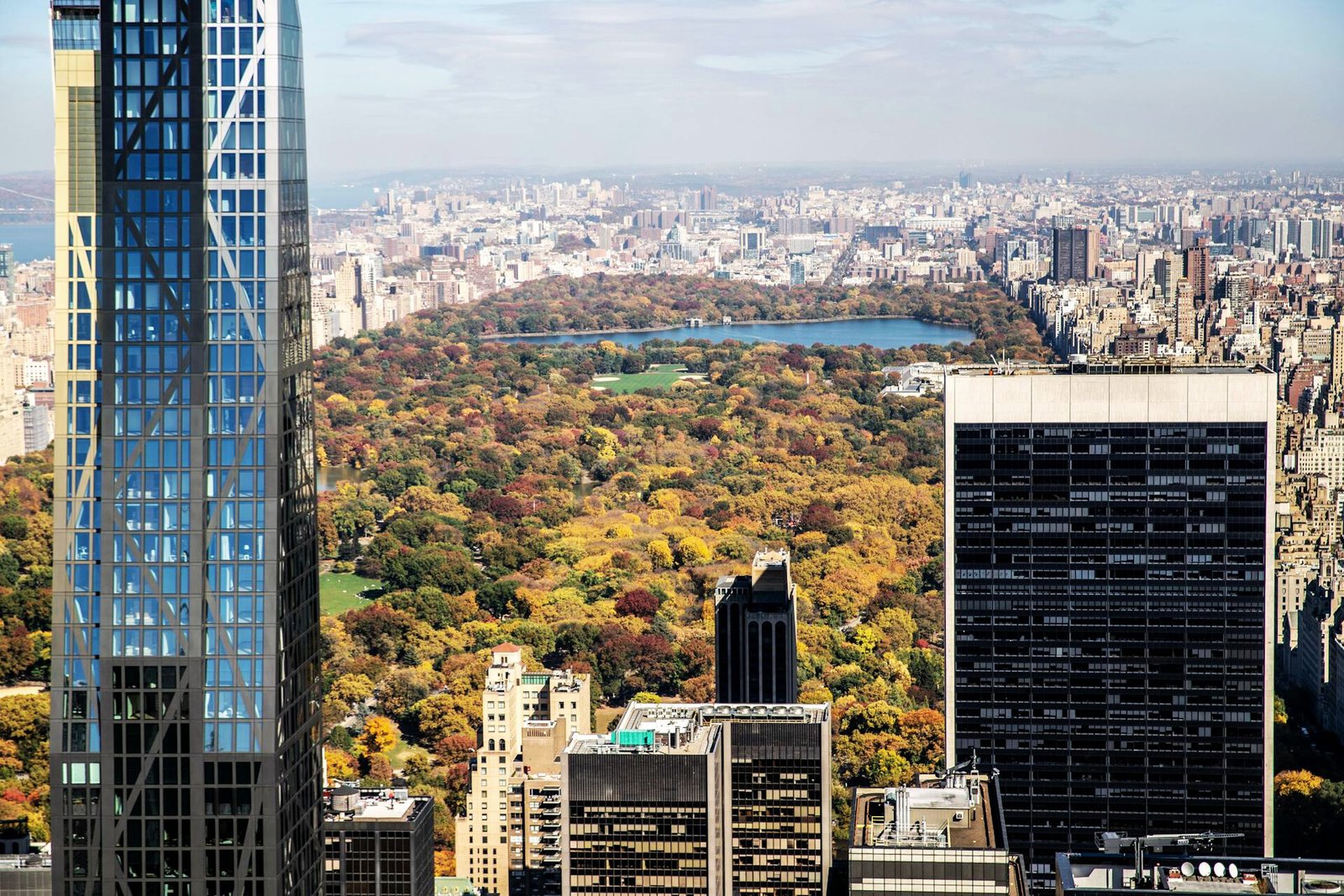
Ever wondered how big Central Park really is?
Most first-time visitors don’t realize its true size until they’ve been walking for about twenty minutes.
Central Park covers 843 acres (3.41 km²).
It stretches about 2.5 miles (4 kilometers) from north to south and roughly 0.5 miles (800 meters) from east to west at its widest point.
That size makes it:
- larger than Monaco
- nearly six times bigger than Vatican City
- bigger than many small towns people call “walkable”
Central Park Size at a Glance
| Measure | Imperial | Metric |
|---|---|---|
| Total area | 843 acres | 3.41 km² |
| Length (north–south) | 2.5 miles | 4 km |
| Width (widest point) | 0.5 miles | 800 meters |
 What That Size Actually Means When You Visit
Numbers don’t fully explain Central Park. Walking it does.
If you try to cross the park from 59th Street to 110th Street, expect:
- 60–90 minutes of walking without long stops
- much longer if you explore lakes, bridges, or museums
This is why visitors often say, “We thought we saw Central Park… but we really didn’t.”
The park isn’t one attraction. It’s a collection of landscapes:
- wooded areas that feel remote
- open lawns larger than city squares
- hills, lakes, and winding paths that break all sense of direction
 Why Central Park Feels Bigger Than It Looks on a Map
Central Park doesn’t run in straight lines.
Paths curve. Elevation changes. Trees block long sightlines. You rarely see “the end,” which makes distances feel longer than they are.
That design was intentional. The park was built to disconnect visitors from the city, even though Manhattan traffic is never far away.
It works.
 How Long Does It Take to See Central Park?
It depends on how you visit:
- Quick visit (highlights only): 1–2 hours
- Casual walk + a few stops: half a day
- Exploring different sections: easily a full day
Many locals treat Central Park like a neighborhood — not something you “finish,” but something you return to.
 Which Parts of Central Park Most Visitors Actually See
Despite its size, most tourists only experience the southern section:
- near 59th Street
- close to major hotels
- steps away from Midtown attractions
The northern half of Central Park is quieter, greener, and far less crowded — but rarely visited by accident.
That’s another reason the park feels endless: most people never reach its edges.
 Is Central Park Bigger Than You Expect?
Almost everyone says yes.
Photos flatten it. Maps simplify it. Reality stretches it.
Central Park is not just large — it’s deceptively large, especially if you plan to “walk through it quickly” between other NYC plans.
 Top Spots That Really Show How Big Central Park Is
Central Park doesn’t feel huge when you first step in — especially near the busy southern entrances.
But after a while, the distances start to sink in.
One moment you’re watching street performers near Bethesda Terrace.
Forty minutes later, you’re crossing Bow Bridge wondering how you walked that far already.
A few places that really put the park’s size into perspective:
• Bethesda Terrace & Fountain — the lively heart of the park
• Bow Bridge — quiet, scenic, and farther than most people expect
• Strawberry Fields — calm, tucked away, and not a quick stroll from Midtown
• Belvedere Castle — high above the trees with wide views across the park
• The Mall — a long, beautiful walk that feels endless in the best way
What surprises most visitors isn’t any single spot — it’s how much walking it takes to connect them.
That’s usually the moment people say,
“Wow… I didn’t realize Central Park was this big.”
 Is Central Park Safe to Explore Given Its Size?
Yes — and for most visitors, it feels safer than many city neighborhoods.
Despite covering hundreds of acres, Central Park is:
• heavily patrolled by park rangers and NYPD
• busy during daylight hours with locals, joggers, families, and tourists
• well-maintained with clear paths and signage
The main thing to remember is that the park becomes quieter after dark, especially in the northern sections.
During the day, walking, biking, and sightseeing across Central Park is considered very safe by both locals and visitors.
 Common Mistakes Visitors Make About Central Park’s Size
Even experienced travelers underestimate it. The most common mistakes we see:
1. Treating it like a shortcut
People plan to “walk through” Central Park between attractions — and end up late for everything else.
2. Wearing the wrong shoes
Distances are longer than they look. Comfortable walking shoes matter.
3. Trying to see it all in one hour
You’ll only scratch the surface — and feel rushed the whole time.
4. Sticking only to the southern end
The quieter, greener northern half is where the park really opens up.
5. Not planning a route
Without a loose plan, it’s easy to wander far off course and lose time.
 A Simple Way to Experience Central Park Without Getting Tired
Instead of trying to cover the whole park, many locals explore it in sections:
• South end for iconic sights and energy
• Middle section for lakes, bridges, and views
• North end for quiet nature and fewer crowds
Each part feels like a different park — and together they explain why Central Park is so massive.
If you enjoy learning as you walk, guided tours are a great way to see the highlights without rushing.
And if you’d rather relax while still covering a lot of ground, pedicab rides through the park are a popular local favorite — they stop for photos, move easily along park paths, and let you experience much more in a shorter time.
👉 Explore Central Park by Pedicab – see routes and availability here
👉 Join a Guided Central Park Tour – view prices and schedules here
❓Frequently Asked Questions
Is Central Park really as big as people say?
Yes. Most visitors understand the size only after walking for a while. On a map it looks manageable, but inside the park distances add up quickly.
How long does it take to walk from one end of Central Park to the other?
From south to north, most people need about one to one and a half hours if they don’t stop much. With photos and breaks, it easily turns into two hours.
Can you walk across Central Park east to west?
Yes — but even that short-looking crossing can take 20–30 minutes, depending on where you enter and how much you wander.
Is Central Park bigger than Monaco or Vatican City?
Yes. Central Park is larger than Monaco and several times bigger than Vatican City, which surprises a lot of first-time visitors.
Why does Central Park feel bigger than it looks on Google Maps?
Curved paths, hills, trees, and hidden sections break your sense of distance. You rarely see straight lines or clear endpoints.
Which part of Central Park is the biggest or least crowded?
The northern half feels more open and much quieter. Most tourists stay near the southern entrances, so the north feels almost like a different park.
Can you see all of Central Park in one day?
Not comfortably. You can see highlights in a day, but exploring the entire park properly usually takes multiple visits.
Is it realistic to visit Central Park between other attractions?
That’s a common mistake. Central Park works best when it’s the main plan for a few hours, not something squeezed between appointments.
Does Central Park feel too big for kids or older visitors?
It can — which is why many families and older visitors choose guided tours or pedicab rides to cover more ground without exhaustion.
Is Central Park safe considering how large it is?
During the day, yes. It’s busy, well-patrolled, and full of locals. Like any large park, it gets quieter at night, especially away from main paths.
Final Thoughts ?
On Google Maps, Central Park looks normal.
In real life — it’s huge.
Most people think they’ll walk through it in 20 minutes.
Almost nobody does.
You walk.
You keep walking.
And you’re still in the park.
Once you realize how big it actually is, everything makes more sense — why people get tired, why they don’t see everything, and why it deserves real time, not a quick stop.
Simple as that.
❤️ Support Our NYC Travel Guides
We run this site to help travelers move around New York with less stress and better local tips — from subway routes to neighborhood guides and real-life advice. If our guides save you time or help you plan a smoother trip, you can support our work through Patreon. Your support helps us keep guides updated and share honest NYC travel tips without cluttering the site with ads.
Support us on Patreon




0 Comments