








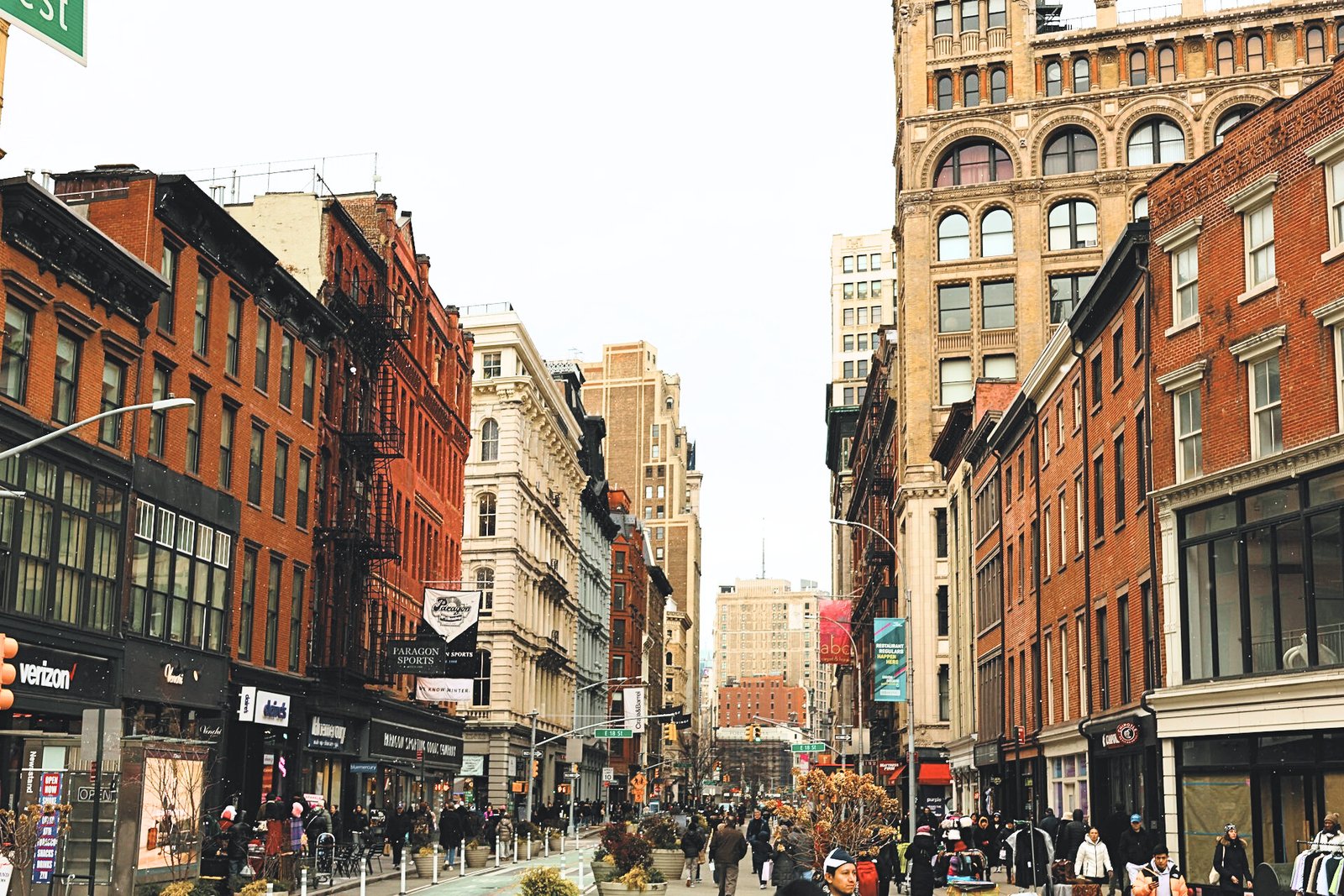
When people ask what does SoHo stand for in NYC, they’re usually surprised how much history is hidden behind the name. Everyone has a different picture of SoHo in their head. For some, it’s the stylish crossroads where fashion editors duck into boutiques between shows. For others, it’s the neighborhood where a quick coffee turns into half an afternoon of wandering. And then there are the people who hear that familiar question — what does SoHo stand for in NYC — and realize they’ve walked these streets a hundred times without ever thinking about its name.
SoHo is one of those places that belongs to all of us. And even after learning what does SoHo stand for in NYC, most people realize the name is just a doorway into one of Manhattan’s most layered neighborhoods.
New Yorkers claim it as a mood, not a map point. Visitors see it as the neighborhood that feels most like the New York they’ve imagined. People who work here swear the light hits the cast-iron facades differently every morning. And those who come for the weekend shopping trip always end up discovering something else — a tiny gallery, a bakery with six tables, or a quiet block that feels like the city paused just for them.
Understanding what does SoHo stand for in NYC — literally “South of Houston Street” — only explains the geography. What it really stands for depends on who you ask. Style, creativity, reinvention, long walks, good coffee, unexpected conversations on street corners, or that feeling of stepping into a neighborhood where everything has a bit of texture and personality.
This isn’t just a guide for people passing through.
It’s for anyone who appreciates neighborhoods that tell stories — whether you’ve lived here for decades, just arrived with a suitcase, or simply love reading about the places that make New York feel alive.
 Where Exactly Is SoHo and Why Everyone Talks About It
Before SoHo became a travel darling, it was a neighborhood of empty factories and lofts nobody wanted. Artists came first — painters, sculptors, dancers — and turned forgotten industrial floors into airy studios. Then design houses came. Then boutiques. Then cafés. Then the rest of the world.
Today, when someone asks what does SoHo stand for in NYC, the geographic explanation (“South of Houston”) only opens the door. The real meaning is what you feel the second you step onto Spring Street and look up at those famous cast-iron buildings. That’s why so many guides try to answer what does SoHo stand for in NYC, but the feeling you get standing under those facades explains it better than any definition.
Everything here feels like a movie set, except people actually live their lives on these streets — running to meetings, sipping cortados, hauling garment bags, stopping in front of a storefront mirror to fix their hair. SoHo is polished, but it’s still New York at its core.
 How to Explore SoHo Like a Local
Here’s the truth: locals can tell instantly who’s exploring with genuine curiosity and who’s rushing through with a shopping list.
And we want you in the first group.
Avoid the “one-block-and-done” mistake
Many travelers roam Broadway only, get overwhelmed, and leave. But SoHo is a whole world beyond that stretch.
Move one block west or east and suddenly everything becomes calmer, prettier, and more authentic.
Take your time on the cobblestones
Cobblestones are not just cute — they’re iconic. They also twist ankles if you hurry. Slow down. SoHo rewards slow walkers.
Be aware of the architecture
This is the largest collection of cast-iron buildings in the world. If you’ve ever wondered “what does SoHo stand for in NYC besides shopping,” the architecture is your answer.
Look up. Always.
Try small cafés, not only famous ones
Yes, the trendy places are fun, but some of the best pastries are tucked inside tiny spots on Sullivan, Prince, and West Broadway.
 What to Do in SoHo: Our Must-Do List
The Cast-Iron District Walk
If you learn what does SoHo stand for in NYC, you should also know what made it legendary. The cast-iron architecture is unlike anywhere else in the United States. Wander Greene Street, Wooster Street, Broome Street — every building looks like it belongs in a museum.
Boutique Browsing on Spring Street
Spring is where fashion editors shop quietly, stylists look for inspiration, and visitors try to understand why everyone in Manhattan dresses so well. Even window-shopping here feels like entertainment.
Stop for a Coffee on West Broadway or Prince
SoHo’s coffee culture is real. Locals linger, take calls, write emails, and people-watch. Join them. Just keep your table clean — it’s a small local pet peeve.
Visit the Drawn Cupboard Studios and Pop-Ups
Some little stores look like shops but are actually micro-galleries. Step inside. The artists love curious visitors.
SoHo Galleries
Modern art thrives in SoHo. Some galleries rotate new artists every few weeks. You never know what you’ll walk into, and that’s part of the charm.
Sneaker Heaven
For sneaker fans, SoHo is paradise. Limited drops, independents, flagship stores — if shoes are your love language, this neighborhood speaks it fluently.
Sweet Treats on Every Block
From luxury chocolate to old-school cookies, SoHo is a sugar rescue mission after a long walk.
 Where to Eat in SoHo (Local Favorites, Not Tourist Traps)
SoHo has this reputation for looking polished, but the best food here is the kind that feels warm, casual, and lived-in — the places where locals meet after work, where someone is always reading a book by the window, and where the staff remembers regulars’ orders. These are the spots people genuinely recommend when someone asks for food recs that feel like “real SoHo.”
Balthazar
The classic French brasserie that feels like it’s been part of downtown forever. Locals go early for breakfast, tourists go later for the energy, and everyone agrees the pastries and onion soup are a must at least once.
What to order:
Sadelle’s
A SoHo staple famous for bagels, smoked salmon towers, and brunch you’ll talk about for days. It’s busy, yes — but it’s worth it, especially on weekdays when the line moves fast.
What to order:
Rubirosa
A neighborhood favorite for thin-crust pizza you can’t really get anywhere else. Locals order the tie-dye pie and a salad, and suddenly lunch turns into a long, happy pause.
What to order:
Prince Street Pizza
If you like a square slice with crunchy edges and spicy pepperoni cups, this is the spot. Lines move quickly. Grab a slice, walk a block, and eat it while people-watching.
What to order:
Jack’s Wife Freda
A bright, friendly spot with a Mediterranean heart. Locals swear by the chicken kebab, the rosewater waffle, and the green shakshuka. Great energy, great people-watching, and never feels heavy.
What to order:
Dominique Ansel Bakery
Home of the Cronut, but locals go for the DKA (trust us). The back garden is one of the sweetest hidden corners in the neighborhood.
What to order:
12 Chairs Café
A real downtown favorite that feels warm and unfussy. Israeli comfort food, spicy dips, big salads, soft pita — everything tastes fresh and homey.
What to order:
Ladurée (SoHo Garden)
If you want a quiet escape in the middle of downtown, go here. There’s a hidden garden in the back that feels like you fell into a European movie scene.
What to order:
Little Prince
Cozy, romantic, always good. The French onion soup burger is the dish locals whisper about to friends who love flavor experiments.
What to order:
Pera SoHo
Mediterranean with a courtyard that feels like a secret. Perfect for warm nights, date nights, or a long chatty dinner with friends.
What to order:
Fanelli Café
One of the oldest bars in the city. No trendy gloss, no curated playlists — just the charm of a real New York institution with solid food and a lived-in vibe.
What to order:
Blue Ribbon Brasserie
Late-night perfection. The fried chicken is a classic, but locals also order oysters, steak, or just a bowl of matzo ball soup after a long night out.
What to order:
The Tyger
A downtown favorite for Southeast Asian food with big flavors and big personality. The tiger prawn curry and Thai fried chicken are neighborhood legends.
What to order:
 Smart SoHo Tips
Tip 1: Skip Broadway and start on the real SoHo blocks
Broadway is loud, crowded, and full of stores you already know.
For the SoHo people fall in love with, walk Greene Street and Wooster Street first — these two streets have the best architecture, the cleanest blocks, and the boutiques locals actually browse.
Where to stop:
Tip 2: Stick to the cross streets that feel the most “SoHo”
Some streets just look and feel like the neighborhood you’ve seen in movies.
The best ones for atmosphere + shops:
Quick detour:
Walk Mercer Street between Prince and Spring — it’s one of the prettiest stretches in the entire neighborhood.
Tip 3: Visit the pop-ups — this is where SoHo surprises you
SoHo pop-ups can be better than regular stores, and locals know it.
You never know what’s inside until you step in — sometimes it’s a limited sneaker drop, sometimes a skincare lab, sometimes an interactive art room.
Consistently good pop-up spots:
Tip 4: Bring comfortable shoes (seriously)
SoHo looks small on the map but you’ll easily walk 8,000–12,000 steps without noticing.
Cobblestones + uneven sidewalks = stylish sneakers win every time.
Where locals buy comfy but stylish shoes in SoHo:
Tip 5: Know the best photo corners
If you want that iconic SoHo look:
Tip 6: If you need a break, choose the right coffee spots
Avoid the overcrowded chains. These are the spots locals actually sit down at:
Tip 7: Best little stops between shopping
If you need a reset:
- Housing Works Bookstore — peaceful, cozy
- Museum of Ice Cream (for fun photo moments)
- Artists & Fleas SoHo — handmade jewelry + indie designers
- McNally Jackson Books — stunning interior, real neighborhood gem
 Is SoHo Safe?
Yes — extremely.
This is one of the safest parts of Manhattan. Just use common sense:
At night, people are always out — restaurants, shops, galleries. You’ll feel comfortable strolling until late.
 How to Get to SoHo Without Stress
SoHo is one of the easiest neighborhoods to reach, but many people end up getting off a few blocks too far and walking through the busiest, least charming stretches. Here’s the straight-to-the-point local version so you enter SoHo from the prettiest streets, not the chaotic ones.
Best Subway Stations
Taxi/Ride-share
Set your drop-off to Prince St & Greene St — it’s central, safe, and feels like the “postcard version” of SoHo.
Avoid being dropped directly on Broadway unless you enjoy traffic, honking, and sidewalk crowds.
Walking Tips
If you’re nearby, these are the nicest walking routes locals actually take:
Quick Local Advice
SoHo is extremely walkable, but it’s also easy to get overwhelmed if you stick to Broadway. Start around Greene St or Mercer St, wander toward Prince and Spring, and let yourself drift in whatever direction looks interesting. The neighborhood feels best when you explore side streets, peek into pop-ups, and take your time — SoHo rewards slow, curious walkers.
 What NOT to Do in SoHo
There are a few things locals secretly wish visitors would avoid:
Don’t rush: SoHo is meant to be savored, not conquered
Don’t block sidewalks to take group photos
Don’t sit on store steps — most of them are private
Don’t assume all shops are luxury-priced (many small boutiques are affordable)
Don’t ignore side-street restaurants — the best meals are rarely on Broadway
 Why Understanding “What Does SoHo Stand For in NYC” Actually Changes Your Visit
When you know that what does SoHo stand for in NYC means South of Houston Street, you start noticing how everything here is shaped by that simple fact — the grid, the energy, the mix of old factory bones and modern fashion heartbeat.
But when you dig deeper, the real meaning becomes clear:
It’s the neighborhood where artists once dreamed big inside dusty lofts.
It’s where shoppers chase the latest trends.
It’s where locals find quiet cafés tucked between historic facades.
It’s where every street feels like a magazine spread.
And it’s where New York’s past and present walk side by side.
SoHo stands for more than a location — it stands for the story of downtown Manhattan, written in iron, brick, glass, and style.
 Must-Do Experiences for First-Timers
If you want the essentials — the moments that explain what to do in SoHo better than any map — these are the non-negotiables. The things every first-timer should see, feel, taste, and walk through at least once.
When you leave, you’ll feel like you’ve lived a small piece of New York.
 Best Time to Visit the SoHo
SoHo feels different depending on the time of day, and picking the right moment can completely change your experience.
Morning (9–11 AM) — The Sweet Spot
Shops open, streets are calm, and cafés have that gentle early-day energy. The light on the cast-iron buildings is beautiful, and you can take your time wandering without the crowds.
Afternoon (12–4 PM) — Busy but Full of Life
This is classic SoHo: shoppers, creatives, deliveries, street style, everything happening at once. Lively and exciting, but expect crowds — especially on Broadway.
Golden Hour (4–6 PM) — The Most Photogenic Time
The neighborhood softens. Facades glow, shadows stretch, and the streets feel cinematic. Perfect for slow walks through Greene, Mercer, and Wooster.
Evening (6–9 PM) — Calm, Warm, and Restaurant-Friendly
Shops close, sidewalks clear, and SoHo becomes a quieter, cozier version of itself. Great time for dinner, a drink, or a peaceful stroll.
Weekdays vs Weekends
Seasonal Tip
SoHo shines in:
Summer can feel crowded and hot; winter is beautiful but breezy between the buildings.
Avoid: Weekend afternoons and peak summer midday heat — SoHo is best when the streets aren’t packed and the sun isn’t bouncing off the buildings.
 Best West Village Tours to Book Right Now
If you’re planning your day around what to do in SoHo, a guided walking tour is one of the easiest ways to experience the neighborhood without getting lost in the crowds. These tours blend SoHo’s cast-iron architecture, its fashion-forward energy, and the surrounding neighborhoods you’ll naturally wander into — Little Italy, Chinatown, Greenwich Village, and even the Meatpacking District. Here are three highly rated options worth adding to your itinerary.
1. Greenwich Village, SoHo, Little Italy & Chinatown Walking Tour
⭐ 5.0 (8) | from $56.00 | Free cancellation
A relaxed but thorough walk through four of downtown’s most famous neighborhoods. You’ll get a mix of SoHo’s architecture, Little Italy’s food culture, and Chinatown’s lively streets — with stories and stops that help you understand how these areas connect. Great for first-timers who want a little bit of everything without rushing.
👉 Book the Greenwich Village, SoHo & Chinatown Tour →
2. Guided Tour of SoHo, Greenwich Village & the Meatpacking District (French Guide Available)
⭐ 5.0 (97) | from $65.17 | Free cancellation
Likely to Sell Out
A deeper dive into SoHo’s cast-iron blocks and the historic Village streets, with an added loop through the Meatpacking District. Expect a mix of architecture, cultural stories, and local history. This tour is fantastic if you want an easy, well-guided introduction to three neighborhoods that blend into one another.
👉 Reserve the SoHo, Village & Meatpacking Tour →
3. SoHo, Little Italy & Chinatown Walking Tour in New York
⭐ 4.9 (3,027) | from $39.00 | Free cancellation
One of the most popular downtown tours — and for good reason. You’ll walk through SoHo’s cobblestones, taste the flavors of Little Italy, and explore the sights, sounds, and energy of Chinatown. Fast-moving, fun, and packed with useful neighborhood insights. A great pick if you want the best value and biggest mix of downtown culture.
👉 Book the SoHo, Little Italy & Chinatown Tour →
❓Frequently Asked Questions
Is SoHo safe for tourists?
Yes — SoHo is one of the safest neighborhoods in Manhattan. It’s busy during the day, calm at night, and full of shops, cafés, and locals. The only thing to watch out for is petty pickpocketing on Broadway; keep your bag zipped and don’t hold your phone loosely in crowds.
Can you walk around SoHo at night?
Absolutely. After the stores close, the streets become calm and glowy, with warm lights bouncing off the cast-iron facades. It feels safe, relaxed, and perfect for heading to dinner. Mercer, Greene, Broome, and Prince Street are especially nice in the evening.
Is SoHo expensive?
Shopping can be pricey, but food doesn’t have to be. If you’re budgeting, stick to:
- Prince Street Pizza
- Dominique Ansel Bakery (DKA instead of Cronut)
- 12 Chairs Café
- Local cafés rather than “viral” spots with long lines
High-end boutiques dominate the area, but you can enjoy the neighborhood without spending much.
What’s the prettiest street in SoHo?
Greene Street is the local favorite — cast-iron buildings, cobblestones, and that classic SoHo feel. Mercer and Wooster are close seconds. These are the streets people photograph constantly.
Is it worth visiting SoHo if I only have 1–2 hours?
Yes — start at Prince Street Station, walk Greene and Mercer, grab a pastry at Dominique Ansel or Maman, and end at Broome or Spring Street. You’ll feel the heart of the neighborhood in under an hour.
Where do locals actually eat in SoHo?
Neighborhood favorites with loyal regulars include:
- Jack’s Wife Freda
- 12 Chairs
- Little Prince
- Pera SoHo
- Sadelle’s (best on weekdays)
- Fanelli Café for old-school charm
Locals tend to skip Broadway food spots — they’re busy but not always the best.
What is SoHo known for?
Its cast-iron architecture, boutique shopping, art galleries, cobblestone blocks, European-style cafés, and people-watching. It’s also a major hub for fashion, street style, and pop-up brand experiences.
Can you walk from SoHo to the West Village, Nolita, or Tribeca?
Yes, and these are some of the nicest short walks downtown.
- To West Village: Sullivan or Thompson
- To Nolita: Mulberry to Prince
- To Tribeca: West Broadway heading south
Everything is connected and easy.
Where should I start exploring?
The best starting points are:
- Prince St Station (R/W) — classic SoHo entrance
- Spring St Station (C/E) — quieter and photogenic
- Broadway–Lafayette (B/D/F/M) — easy access from the east side
Is SoHo walkable?
Very — but expect uneven cobblestones and busy sidewalks. The side streets are perfect for slow wandering, photography, and boutique hopping.
What’s the best hidden gem in SoHo?
Locals love:
- Housing Works Bookstore
- The back garden of Ladurée
- The quiet stretch of Wooster between Grand and Broome
- Artists & Fleas for handmade and indie designers
- Kaigo Coffee Room for a calm break
Do I need reservations for restaurants in SoHo?
Popular spots like Sadelle’s, Little Prince, and Balthazar often require reservations on weekends. Casual cafés, bakeries, and pizza shops do not.
What should I avoid doing in SoHo?
- Walking only on Broadway (crowded, tourist-heavy)
- Blocking sidewalks for photos
- Expecting to find public bathrooms easily
- Wearing hard-to-walk-in shoes (cobblestones!)
- Only visiting chain stores — you’ll miss the independent boutiques
Is SoHo good for families?
Yes — but avoid the busiest blocks on Broadway with strollers. Stick to Greene, Mercer, and Wooster for more space.
How long do you need to see SoHo?
Two hours for a quick walk, three to four if you want cafés, stores, and photos, and a half-day if you include lunch or a tour.
What’s the dress code for SoHo?
There isn’t one, but people here tend to dress stylish without trying too hard. Comfortable sneakers are key — both for walking and for the cobblestones.
Final Thoughts?
SoHo has a way of pulling you in without trying. Maybe it’s the light on the buildings, the smell of coffee drifting out of a side-street café, or the mix of people who all seem to be on their own little missions. Whatever it is, the best thing you can do here is let the neighborhood take the lead. Wander without rushing, look up once in a while, stop for something that smells good, and don’t worry too much about sticking to a plan. SoHo works best when you let it surprise you.
By the time you leave, you won’t just know what does SoHo stand for in NYC — you’ll understand why the neighborhood became one of the most unique corners of Manhattan.

USA+ eSIM Plans
If you want total peace of mind during your New York trip, consider Saily’s USA Unlimited eSIM plan. For around $48.99, you get unlimited data for your stay — that’s roughly $1.60 per day for nonstop connectivity across major U.S. networks, including Verizon and AT&T.




0 Comments